We believe every cup of coffee deserves to be treated with care. That care belongs not only in the beans, extraction and temperature, but also on the cup in your hand. Each cup is paired with a work from the current Rhine Gallery selection, so even the same coffee may leave with a different view. It gives your own cup more character and makes coffee for a friend feel like a small gift chosen with care.
01An artwork for the journey
EXHIBITION 01THE CUP EXHIBITIONART FOR EVERYDAY LIFECURRENT ROTATION478 WORKS
FOUNDING PROOFS · 000001—000006
Founding concept proof
These launch proofs demonstrate the system and visual range. They have not been issued to customers; fulfilled works will be marked as issued archives.
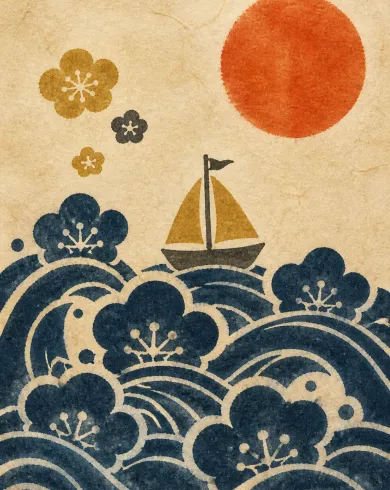
“Sail Under Plum Waves” uses katazome stencil dye on handmade washi to turn an everyday image into a tactile artwork. Dry rice-paste edges, washi fibers and slight registration shifts give the flat silhouettes a handmade pulse.
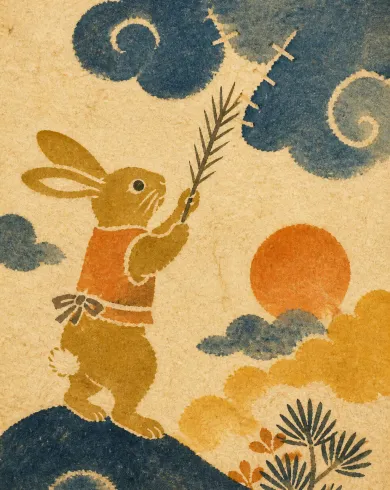
“Rabbit Mends a Cloud” uses katazome stencil dye on handmade washi to turn an everyday image into a tactile artwork. Dry rice-paste edges, washi fibers and slight registration shifts give the flat silhouettes a handmade pulse.
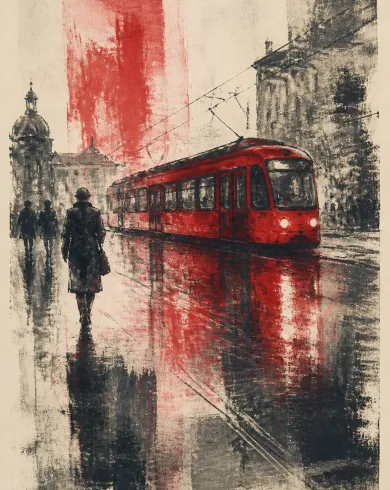
“Red Tram After Rain” uses oil-ink monotype on cotton paper to turn an everyday image into a tactile artwork. Brayer streaks, wiping marks and ghost-plate color exist only in a single transfer, keeping the image direct and imperfect.
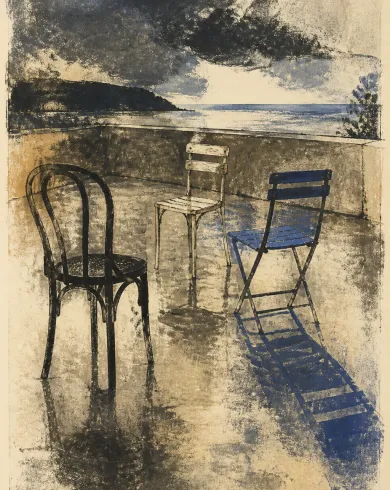
“Three Chairs After Rain” uses oil-ink monotype on cotton paper to turn an everyday image into a tactile artwork. Brayer streaks, wiping marks and ghost-plate color exist only in a single transfer, keeping the image direct and imperfect.
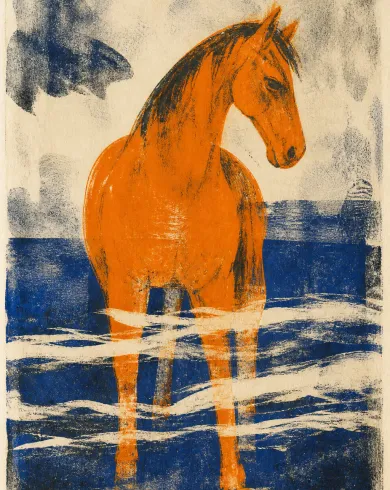
“Orange Horse, Cobalt Shore” uses oil-ink monotype on cotton paper to turn an everyday image into a tactile artwork. Brayer streaks, wiping marks and ghost-plate color exist only in a single transfer, keeping the image direct and imperfect.
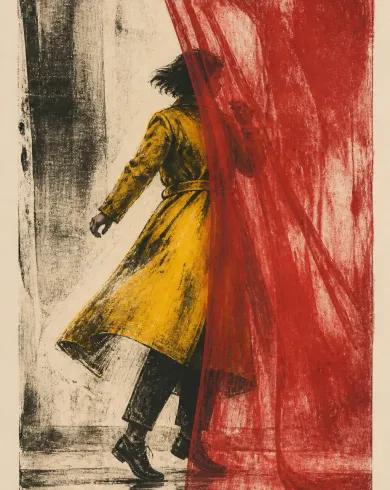
“Dancer Behind the Red Curtain” uses oil-ink monotype on cotton paper to turn an everyday image into a tactile artwork. Brayer streaks, wiping marks and ghost-plate color exist only in a single transfer, keeping the image direct and imperfect.
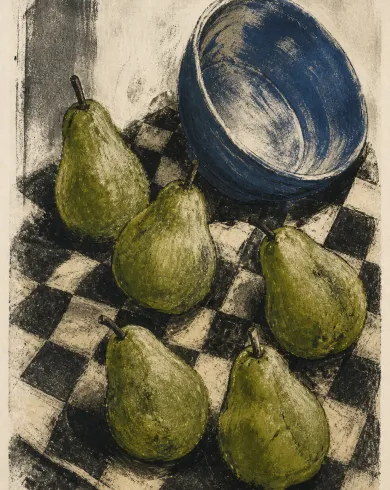
“Pears on Checks” uses oil-ink monotype on cotton paper to turn an everyday image into a tactile artwork. Brayer streaks, wiping marks and ghost-plate color exist only in a single transfer, keeping the image direct and imperfect.
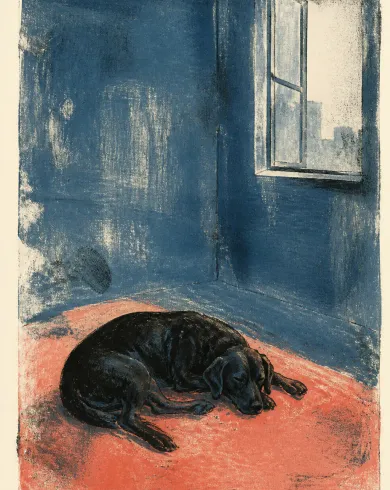
“Black Dog in a Blue Room” uses oil-ink monotype on cotton paper to turn an everyday image into a tactile artwork. Brayer streaks, wiping marks and ghost-plate color exist only in a single transfer, keeping the image direct and imperfect.
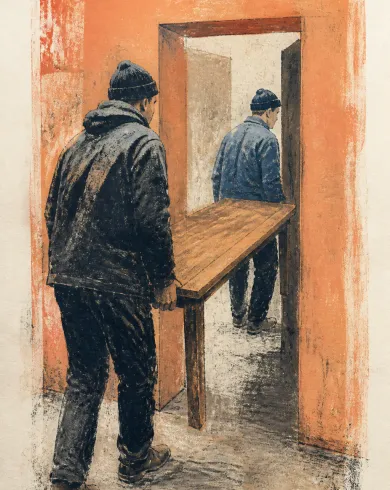
“Table Through the Narrow Door” uses oil-ink monotype on cotton paper to turn an everyday image into a tactile artwork. Brayer streaks, wiping marks and ghost-plate color exist only in a single transfer, keeping the image direct and imperfect.
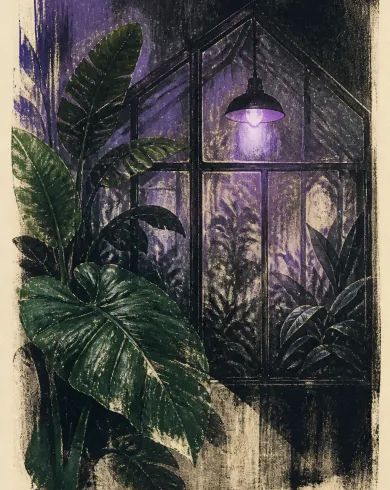
“Greenhouse in Night Fog” uses oil-ink monotype on cotton paper to turn an everyday image into a tactile artwork. Brayer streaks, wiping marks and ghost-plate color exist only in a single transfer, keeping the image direct and imperfect.
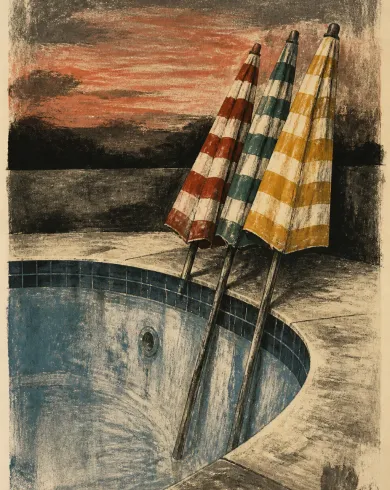
“Umbrellas by the Empty Pool” uses oil-ink monotype on cotton paper to turn an everyday image into a tactile artwork. Brayer streaks, wiping marks and ghost-plate color exist only in a single transfer, keeping the image direct and imperfect.
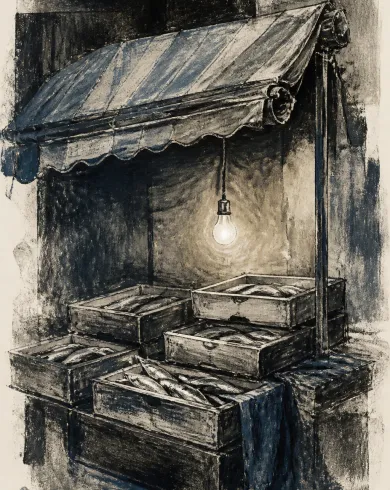
“Market Lights Down” uses oil-ink monotype on cotton paper to turn an everyday image into a tactile artwork. Brayer streaks, wiping marks and ghost-plate color exist only in a single transfer, keeping the image direct and imperfect.
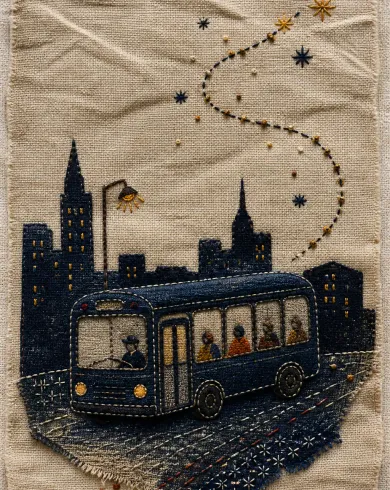
“Night Bus on a Star Route” uses hand embroidery and fabric appliqué to turn an everyday image into a tactile artwork. Uneven stitches, frayed cloth edges and tiny finishing knots make the image feel assembled one patient stitch at a time.
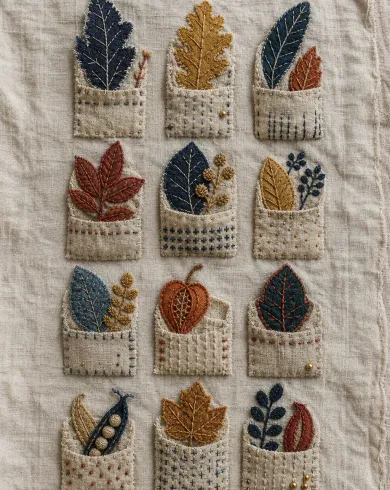
“Pocket Seed Library” uses hand embroidery and fabric appliqué to turn an everyday image into a tactile artwork. Uneven stitches, frayed cloth edges and tiny finishing knots make the image feel assembled one patient stitch at a time.
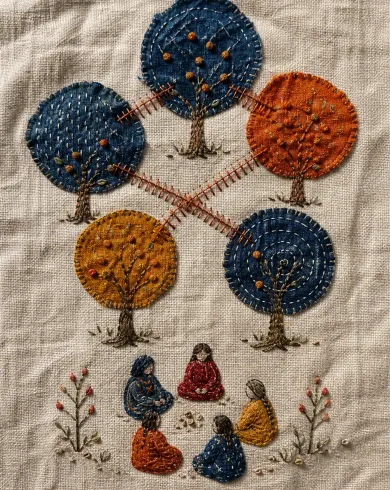
“Mending the Orange Grove” uses hand embroidery and fabric appliqué to turn an everyday image into a tactile artwork. Uneven stitches, frayed cloth edges and tiny finishing knots make the image feel assembled one patient stitch at a time.
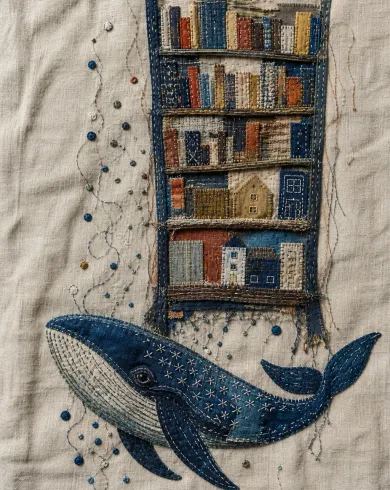
“Whale Beneath the Shelves” uses hand embroidery and fabric appliqué to turn an everyday image into a tactile artwork. Uneven stitches, frayed cloth edges and tiny finishing knots make the image feel assembled one patient stitch at a time.
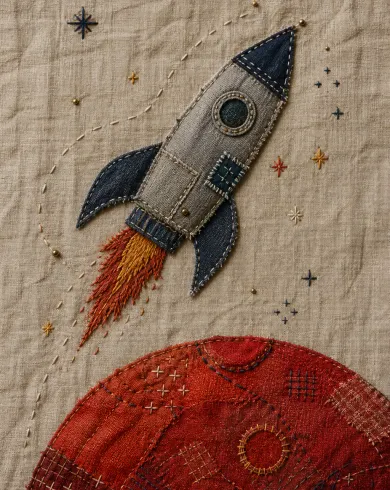
“Patchwork Rocket” uses hand embroidery and fabric appliqué to turn an everyday image into a tactile artwork. Uneven stitches, frayed cloth edges and tiny finishing knots make the image feel assembled one patient stitch at a time.
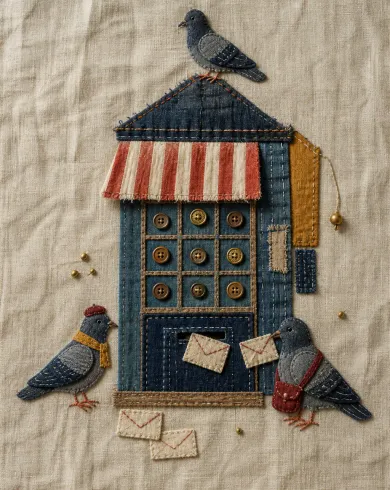
“Pigeon Post Office” uses hand embroidery and fabric appliqué to turn an everyday image into a tactile artwork. Uneven stitches, frayed cloth edges and tiny finishing knots make the image feel assembled one patient stitch at a time.
No works match these filters. Try clearing one or more filters.
ONE FULL-SIZE EDITION
When a work stays with you,collect the full piece
Each artwork is offered as a single full-size physical edition. Once collected, it is marked as privately held: no new physical editions are produced, and the image leaves future cup-sticker rotations.
The work is not limited to coffee and is never tied to a particular drink. A city, shoreline, summer afternoon, dream or odd thought may become the next piece.
02
Rhine curates the current rotation
Rhine arranges each rotation by season, visual balance and the available collection, allowing photography, print, painting and collage to take turns on the cup.
03
Prepared for print and the cup
Each work is checked again for composition, color and detail at sticker size, then given an artwork ID so the small print retains clarity and texture.
04
The artwork travels with coffee
At service, the cup is paired with a work from the current rotation. Its story remains online after the coffee is gone. Cup art depends on current curation and production availability; the artwork received may vary.
PRIVACY BY DEFAULT
The artwork has an ID; your order is not on display
The gallery keeps only the artwork ID, date, style, medium and creative note. It does not publicly connect a work with a particular customer, drink or order.
THE CUP EXHIBITION
Today, your cup brings you an artwork
Every cup deserves to be treated with care—from extraction and temperature to the artwork on the cup. For yourself, it gives an everyday coffee more character; for a friend, it feels like a small gift chosen beyond the drink itself. Artwork follows the current rotation and production availability, so the piece received may vary.
 Founding concept proof