RHINE OPEN RECIPE
Osmanthus Au Lait
桂花蜜香歐蕾
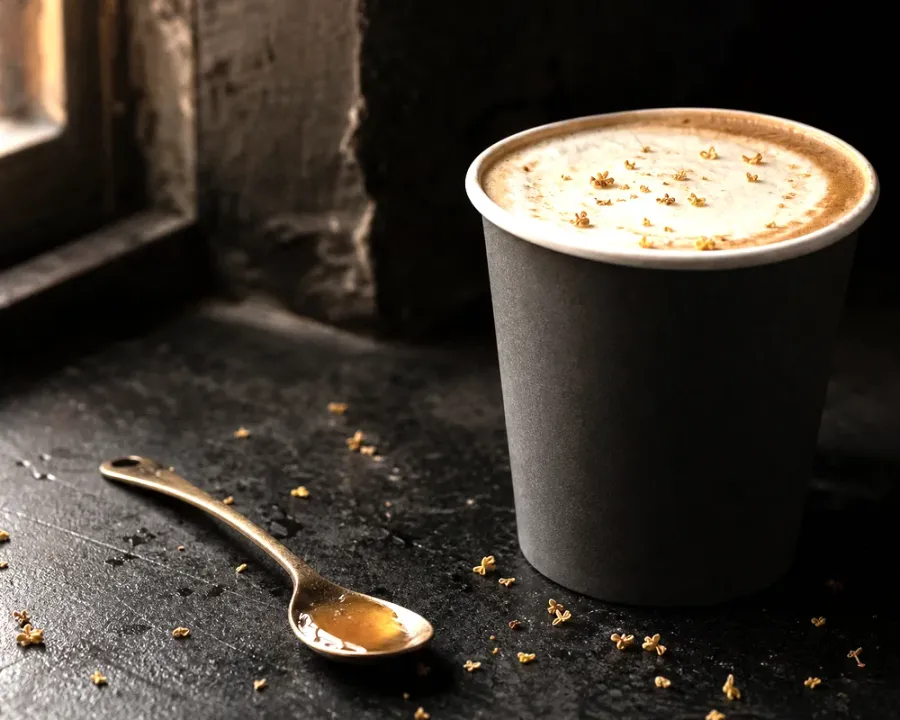
Osmanthus honey and fresh milk with a delicate floral finish
- Yield
- 1 drink
- Time
- 8 min
- Level
- Easy
- Made by Rhine
- NT$115
01 · STORY
Origin & culture
Osmanthus is tied to autumn, tea and honeyed sweets across East Asian food culture. Au lait simply means “with milk”: warm dairy carries the floral honey, making a complete aromatic drink without espresso.
Osmanthus is delicate yet penetrating and is often preserved in honey, fermentation or tea. Long boiling turns dried flowers woody, so this recipe uses a short warm-milk infusion and osmanthus honey for aroma and sweetness.
02 · METHOD
Professional home recipe
This open recipe is designed for home equipment. Adjust extraction slightly for your beans, water and machine.
- Short infusion
- 0.2 g flowers · 30 g milk · 3 min
- Osmanthus honey
- 12–14 g
- Final temperature
- 55–60°C
Method
-
Wake the aroma
Heat 30 g milk to about 60°C and steep dried osmanthus for 3 minutes.
-
Dissolve honey
Strain the flowers, then stir in honey and a tiny pinch of salt.
-
Combine milk
Steam the remaining milk to 55–60°C with fine foam and combine.
03 · VARIATIONS
Barista variations
Stabilize the standard recipe first, then use these controlled changes to tune sweetness, body and aroma. Each variation explains both the change and its effect.
Osmanthus oolong au lait
Steep 3 g oolong in 60 g water at 90°C for three minutes, then add 140 g milk and 10 g honey. Roasted tea grounds the florals.
Osmanthus coffee au lait
Add 25–30 g ristretto, reduce milk to 170 g and honey to 10 g. Choose nut-caramel coffee rather than high-acid fruit notes.
04 · CALIBRATION
Troubleshooting
Only milk, little floral aroma
Do not steep longer first; add 2 g honey or use fresher culinary flowers.
Woody, bitter finish
Shorten infusion to two minutes at 55°C and strain every petal.
WHO · HOW · WHY
Recipe and editorial review
Rhine CoffeeRecipe development and editorial review · Last reviewed August 6, 2026
How this recipe was prepared
Each recipe is written for one finished drink using weights, measured temperature, extraction time and observable texture instead of vague spoonfuls. The café concept is translated for home equipment, with sensory targets and troubleshooting so readers can calibrate for their beans, water and tools.
Why we publish it
Delivery distance should not gatekeep a good cup. We publish methods people can actually use: curious brewers get the full process, while anyone who wants to skip the preparation can still leave the details to Rhine.
MAKE IT YOURS
Too far away? Make it at home.
If delivery does not reach you yet, use the exact ratios, temperatures and sequence here to make a café-standard drink at home.
MADE BY RHINE
Prefer the easy route? Leave it to Rhine.
Skip the weighing, temperature control and milk practice. We will handle the details and deliver the finished cup.
Let Rhine make it